
Mikko Heilimo on Vedonlyöntistudio: Forecasting and AI Models
Why getting the winner right is only part of the problem — and how AI can help turn data into testable models.
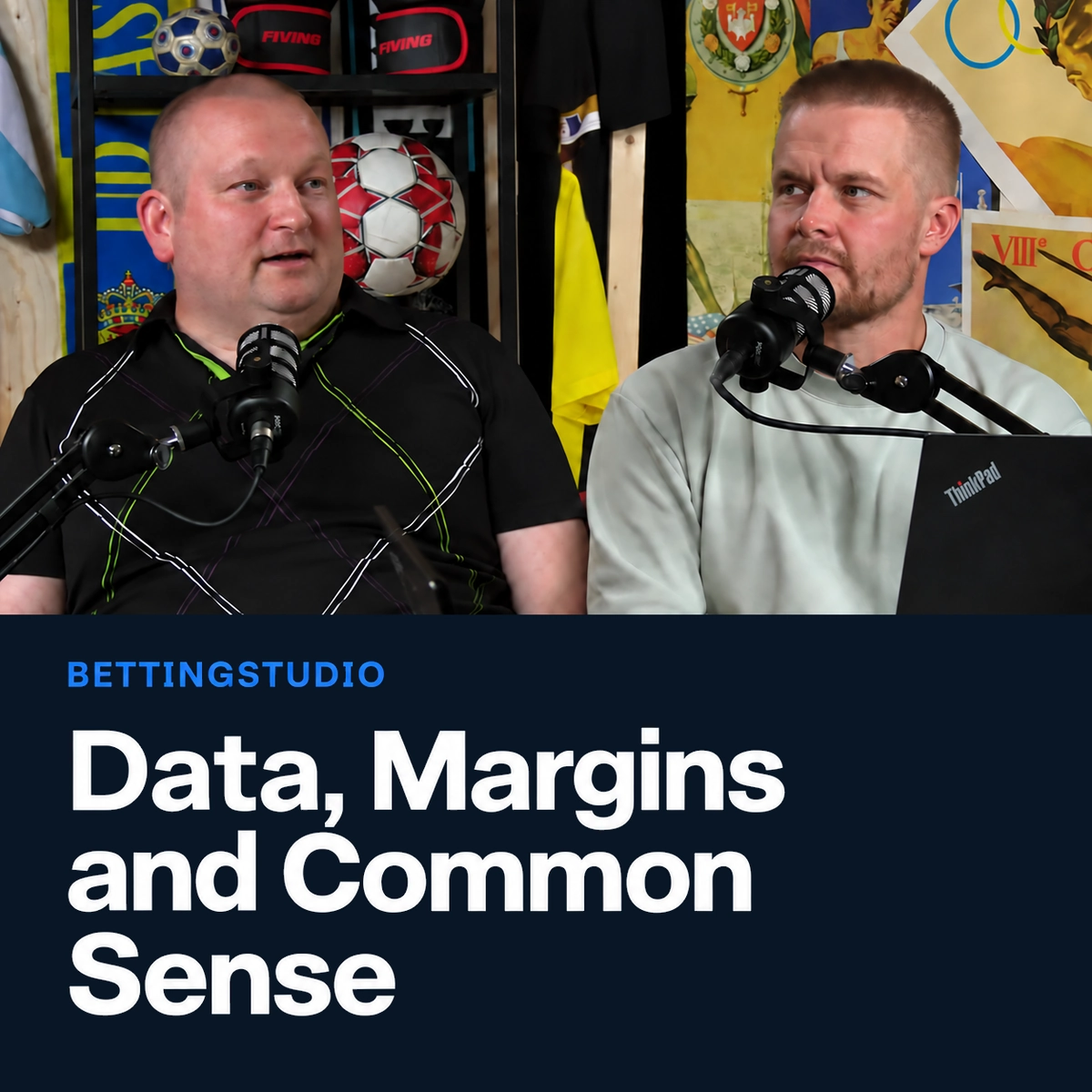
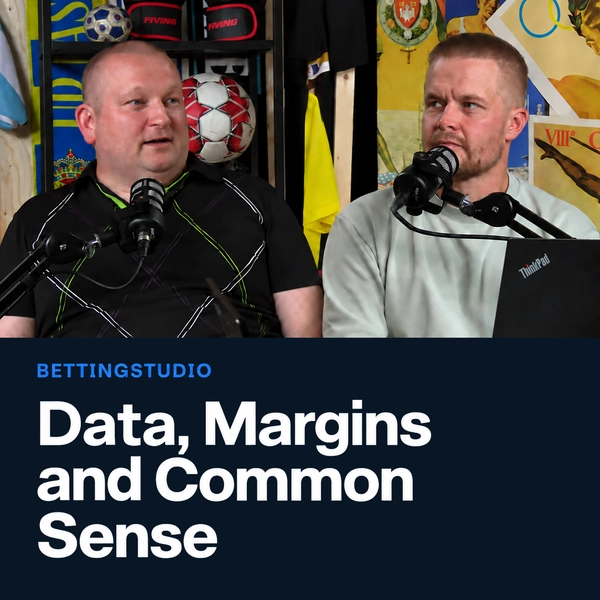
DDScore Founder and CEO Mikko Heilimo joined Vedonlyöntistudio to discuss forecasting in sports betting and the development of AI-assisted models. The episode, “Vedonlyöntimallin rakentaminen” (Building a betting model), was published on Atleetti’s YouTube channel on 5 September 2026.
Watch the full episode on YouTube. The discussion is in Finnish. YouTube offers automatic captions; translation availability depends on your player settings.
Prediction accuracy is only the starting point
A model can pick the winner often and still fail to support profitable decisions. Mikko explains that a betting model must do more than predict an outcome: it needs to estimate the probability, account for uncertainty in that estimate and assess whether the available odds justify the risk. A confident answer is not necessarily a well-calibrated forecast.
The distinction matters beyond betting. Evaluating a forecast means asking both what the model expects and how much confidence the evidence supports.
Better historical results can hide a weaker model
The conversation turns to overfitting: a model can become so closely tailored to past results that it performs poorly on new events. Adding more variables or choosing a more complex model may improve a backtest without improving future predictions.
Mikko also highlights the importance of data that was actually available at the time of a decision. If a historical test includes information learned later, the results can look stronger than they would have been in practice. Changes in players, coaches and tactics create another challenge: old observations may no longer describe the situation being predicted.
Test predictions against new evidence
Mikko advocates comparing model versions on new events and checking whether their probability estimates hold up. Simpler alternatives deserve a place in that comparison. Sometimes the problem is noisy or inadequate data, rather than the choice of algorithm.
The episode also examines market odds as a source of feedback, while recognising that prices can change as new information arrives. Testing a model does not require placing real bets: predictions can be recorded and evaluated against subsequent outcomes.
AI as a tool for building and testing models
In the closing section, Mikko distinguishes language models from AI more broadly. Rather than treating a chatbot’s answer to “who will win?” as a forecasting system, he describes using AI to help formulate problems, write code, build testing tools and process information from sources such as video and news.
His view is that these tools lower the technical barrier to model development. They do not remove the need for relevant data, careful validation or human judgment.
A shared interest in probability and uncertainty
At the start of the episode, Mikko also introduces DDScore and its role in analysing private companies for investors, founders and professional evaluators. The conversation offers a broader look at his approach to modelling: examine the evidence, make uncertainty visible and test assumptions before relying on the result.