
Aura Consolidated Group IPO DDScore Report
Read the full DDScore report on Aura Consolidated Group, Inc., the proposed Qoria merger and ASX listing under AXQ.
Aura, Qoria and the AXQ Listing Case
This DDScore report reviews Aura Consolidated Group, Inc. in the context of its proposed merger with Qoria Limited and ASX listing under the ticker AXQ. The report assesses the company as a growth-stage consumer digital safety business with material revenue scale, a complex listing structure and a risk stack that includes profitability, regulatory, data security and valuation pressure.
The full report above is the primary asset. The sections below make the report readable in HTML for search engines and for readers who want the main map before opening the full PDF.
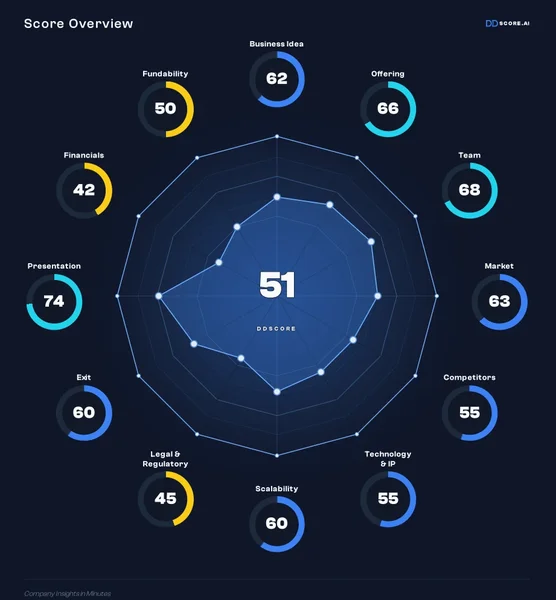
Score Breakdown
The report characterizes the case as an uneven read: real operating scale and institutional backing, offset by financial losses, regulatory exposure, data security questions and valuation compression.
What the Report Highlights
- Strategic logic: the proposed Aura and Qoria combination creates a school-to-home digital safety thesis, connecting Qoria's K-12 footprint with Aura's household identity and family protection offering.
- Material scale: the case is not pre-revenue. The report cites US$277M CY25 combined revenue, US$315.5M merged group ARR and more than 1.3M Aura subscribers.
- Financial caution: combined EBITDA is cited at -US$176M in CY25, worsening from -US$149M in CY24. The report flags sales and marketing intensity and the need for cost reductions to support the path to free cash flow.
- Regulatory exposure: the report identifies an unresolved FTC Civil Investigative Demand covering COPPA, ROSCA, FTC Act, marketing claims and data security topics.
- Security narrative risk: the March 2026 breach is treated as thesis-adjacent because Aura operates in identity protection and consumer digital safety.
- Valuation compression: the report notes the valuation path from US$2.5B in 2021 to US$1.6B in 2025 and an implied pre-money range around US$1.09B in the current transaction context.
- Fundability: the report views the company as investable for public-market investors comfortable with the merger, breach, FTC and profitability risk stack, while noting limited minority-holder protections beyond ASX Listing Rules.
How to Read This DDScore IPO Report
The report is built around DDScore's private company due diligence framework: business idea, offering, team, market, competitors, technology and IP, scalability, legal and regulatory, exit, presentation, financials and fundability. The score is not a price target or investment recommendation. It is a structured view of the materials, public-source context, benchmark patterns and the DDScore scoring model.
For this report, the strongest areas are presentation, team and offering. The weakest areas are financials, legal and regulatory, and fundability. That combination is why the report does not read as a simple bull or bear case. It reads as a scaled company with a credible strategic narrative and a substantial diligence burden.
Readers reviewing the AXQ listing case should focus especially on cohort retention, effective CAC per retained customer, the consumer revenue-share structure, FTC CID status, post-breach security response, Qoria integration risk and whether the cost-cut path can coexist with the ARR growth target.
DDScore does not provide investment advice and does not tell users what decision to make. DDScore provides analytical tooling and quantitative scoring based on submitted materials, available information, benchmarks and the DDScore scoring model. It supports judgement and due diligence workflows. It does not replace investor judgement or a full due diligence process. Investing in private companies involves significant risk, including the possible loss of all invested capital.